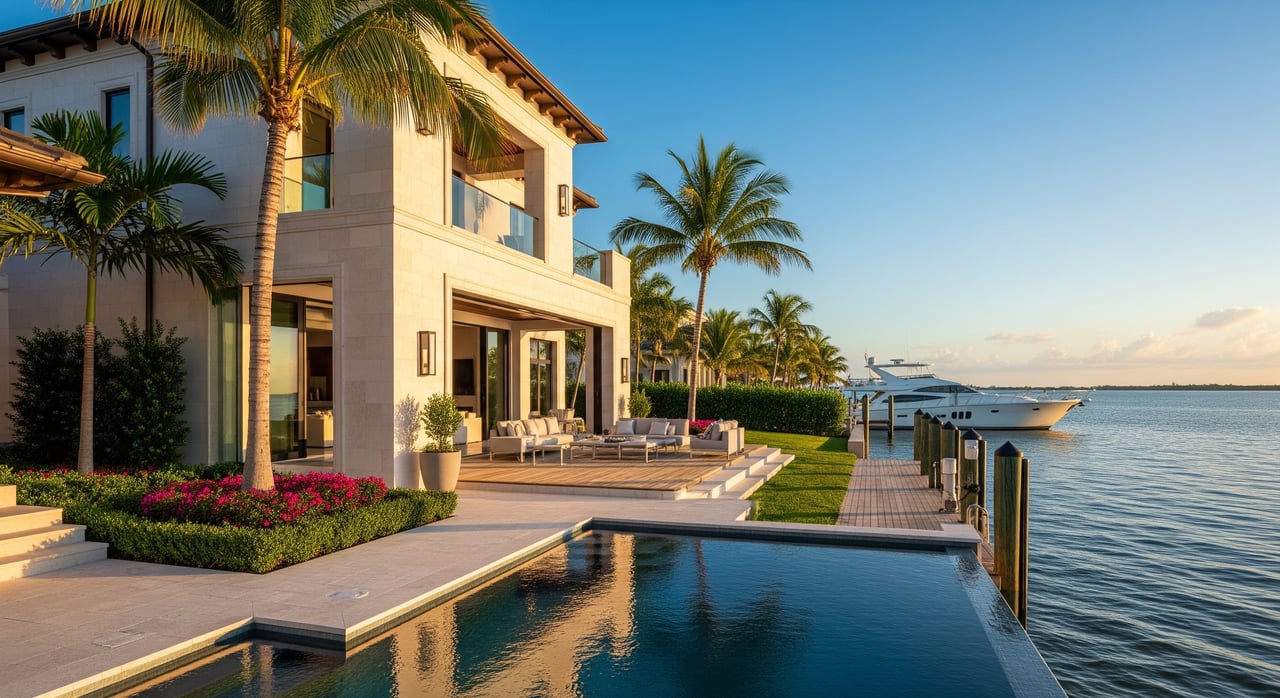
Pricing Waterfront Homes In Bay Colony
January 1, 2026
January 1, 2026
Are you wondering what your Bay Colony waterfront home is really worth, or how to evaluate one you want to buy? Pricing along the water is different. You’re balancing lifestyle, boating access, construction quality, and long-term resilience, not just bedrooms and square footage. In this guide, you’ll learn the key drivers that move value up or down, the documents and data to gather, and how to avoid common mistakes that derail deals. Let’s dive in.
Bay Colony sits within the Naples area of Collier County as a luxury, gated waterfront community. Buyers here value privacy, coastal amenities, and lifestyle, with pronounced seasonality as winter demand rises. When you price a home, confirm the property’s community-specific features, such as private beach access, club membership options, community docks, security, and any deeded amenities. These details shape your buyer pool and the price you can justify.
You also need current local market data. Look at closed sales of comparable Bay Colony waterfront homes over the last 6 to 12 months, plus the active and pending competition. Track days on market and list-to-sale price ratios for luxury waterfront in Naples and Collier County. Seasonal inventory swings and mortgage-rate context can influence timing and strategy.
Not all waterfront is equal. Direct Gulf frontage or beachfront and protected bayfront with unobstructed Gulf access typically command the highest premiums. Canal, river, or preserved mangrove frontage can be desirable, but access depth, fixed bridges, and navigability constraints affect both value and the buyer pool.
Continuous, unobstructed water views outperform partial views. Sunset corridors, privacy lines, and west or south orientations can be meaningful to buyers who prioritize daily view quality and outdoor living. Documenting these elements helps support your price.
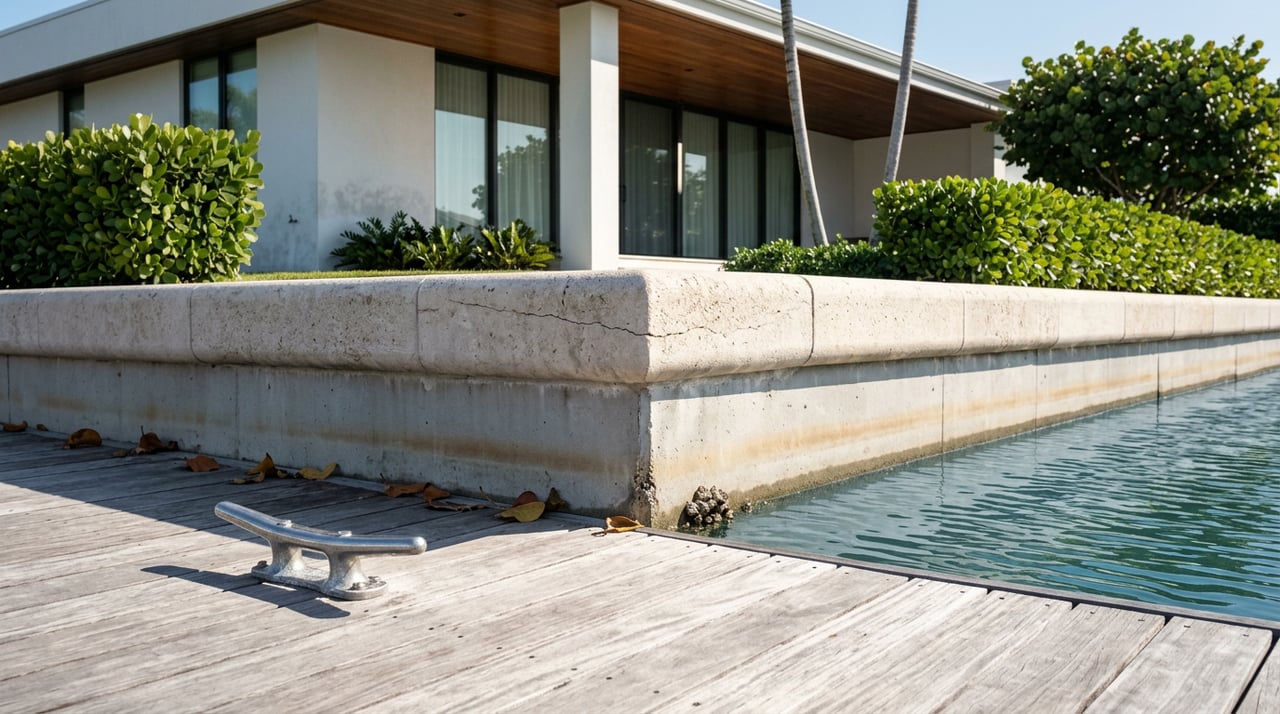
Elevation relative to FEMA base flood elevation is vital. Higher lots can reduce flood risk and insurance costs. Shoreline type matters too. A modern, engineered seawall or well-maintained riprap adds both security and value, while visible erosion or aging shoreline systems can warrant price adjustments.
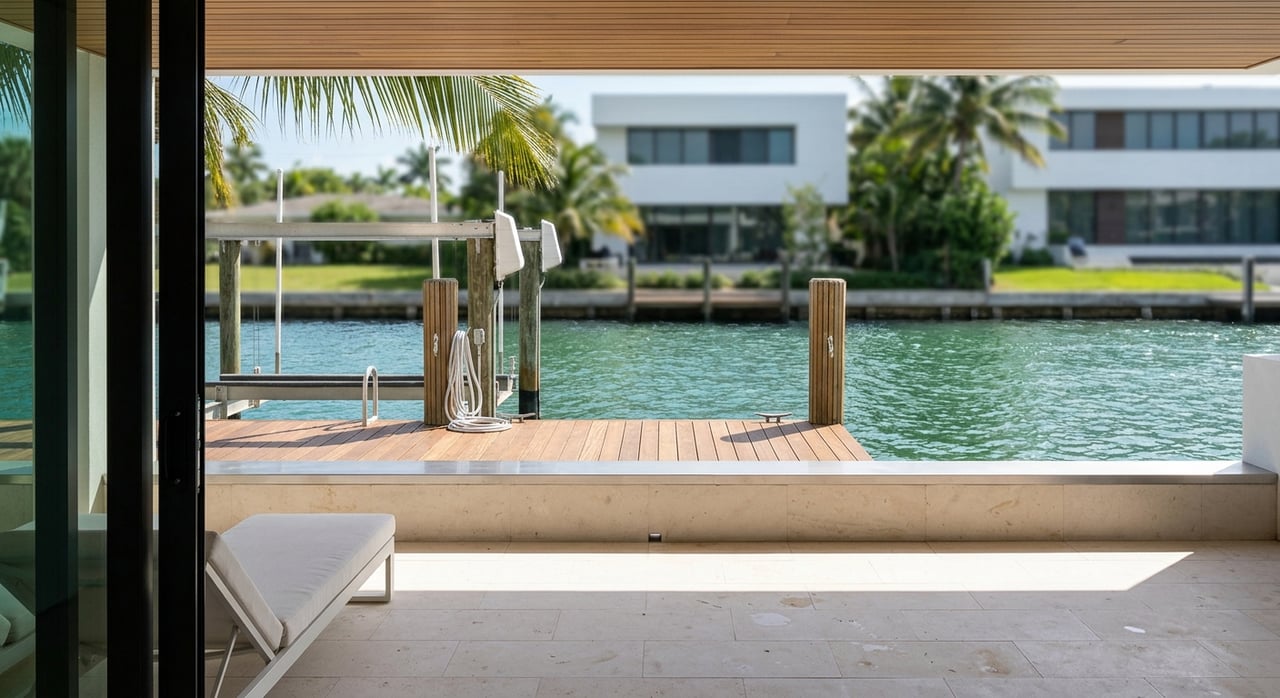
A private dock, lift, and adequate depth at mean low tide can be decisive. The size of vessel supported, bridge clearance, and fuel or marina proximity directly influence buyer interest. Clarify who maintains the dock and any dredging responsibilities, including HOA involvement. Ownership and rights affect long-term cost and desirability.
Elevated construction, impact-rated windows and doors, hurricane shutters, and engineered foundations are value enhancers. Recent major capital items like a new roof, updated HVAC, or a replaced seawall or dock can justify a higher list price and reduce buyer pushback during inspection.
Private beach clubs, gated security, proximity to dining and culture, and overall neighborhood prestige influence price. HOA fees, membership requirements, and rental rules can expand or narrow your buyer pool, especially for investors or seasonal owners.
Riparian rights, mean high and low water lines, access easements, conservation easements, and any public access constraints along the shoreline can affect use and marketability. Clear, early title work helps avoid value surprises.
For a seller, you need a complete data set to price confidently. For a buyer, the same set helps validate an offer.
Authoritative sources include the local MLS, the Collier County Property Appraiser for parcel and tax history, and Collier County Growth Management for permitting and coastal rules. FEMA flood maps, the Florida Department of Environmental Protection, and other public agencies can confirm flood zones, coastal construction lines, and permit requirements.
The sales comparison approach rules luxury waterfront valuation. The best appraisals identify truly comparable frontage and access, then adjust for view quality, lot size and elevation, shoreline condition, and the presence and capacity of docks and lifts. Paired-sales analysis can help quantify the “water premium” for view, orientation, and access differences. Choose appraisers with local coastal experience.
Jumbo loans are common at Bay Colony price points. Lenders may ask for an elevation certificate, a current survey with shoreline lines, and documentation on seawall and dock condition. Expect tighter loan-to-value limits, reserve requirements, and careful scrutiny of storm exposure and insurability.
If a home sits in a FEMA Special Flood Hazard Area, lenders typically require flood insurance. Even outside those zones, coastal buyers often elect coverage. Separate windstorm or named-storm deductibles are also common in Florida. Premiums vary with elevation, mitigation features, and claims history, so obtain quotes early to understand true carrying costs.
Assemble a full package to support pricing and reduce contingencies:
New seawalls, docks, and coastal renovations typically require permits through Collier County and state agencies. Beachfront parcels may be subject to the Coastal Construction Control Line. Verify setbacks, allowable improvements, and process timelines before you price for renovation potential.
Mangroves and wetlands are protected. Removal or trimming often requires permits and mitigation. Conservation easements or nearby preserves can limit changes to vegetation, view corridors, or shoreline structures. Factor these constraints into valuation.
Understand whether the owner or association is responsible for seawall maintenance and channel dredging. These are significant capital items with multi-year cycles. Evidence of siltation, prior dredging, or pending assessments should influence price and negotiation.
Storm surge risk, erosion trends, and sea-level considerations are part of coastal ownership. Buyers pay premiums for documented mitigation and resilient construction. Sellers should highlight elevation, engineering, and durability features to justify pricing.
Coastal homes face higher exterior wear from salt and wind. Seawalls, docks, and pilings require periodic service and eventual replacement. Disclosing recent capital work and reasonable maintenance timelines helps buyers frame total cost and reduces friction later.
Start with the right comps, focusing on water type, navigability, dock capacity, elevation, and construction quality. Document every premium feature: private beach access, deeded beachfront, unobstructed views, a recent seawall replacement, and any club or membership privileges. These details support your top-line number.
Adjust for disamenities. Limited depth at low tide, fixed bridge clearance, partial views, aging shoreline systems, and proximity to heavy boat traffic can require pricing allowances. Consider pre-listing inspections for the seawall, dock, and structure. Providing reports up front can reduce buyer appraisal and inspection risk and speed your path to a clean contract.
In marketing, showcase water access clearly. Drone footage, time-of-day photography for sunsets, and short videos of the boat route tell the story better than text alone. Present dock dimensions, lift capacity, and navigability facts in your materials.
Confirm water access specifics early. Measure depth at mean low tide, identify bridge or air-draft limits, and review association docking rules and dredging history. Obtain an elevation certificate and survey to estimate flood insurance and verify boundaries.
Build inspection contingencies specific to waterfront: seawall, dock, lift, and structural resilience. If replacement is imminent, negotiate for seller credits or escrowed reserves when price is firm. Use recent paired comps to support your offer, focusing on view quality, elevation, and engineered upgrades.
Think in tiers. Properties with direct Gulf or beachfront frontage and unobstructed views typically sit at the high end, especially with a modern seawall and a dock that fits the buyer’s vessel. Protected bayfront with direct Gulf access often follows closely, while canal or mangrove frontage depends on navigability, depth, and view corridors. Partial views, limited access, or older shoreline structures usually shift value downward. Rather than applying broad percentages, rely on local paired sales and line-item adjustments.
Gather these items to price correctly and negotiate with confidence:
Engage the right local professionals: a waterfront-experienced appraiser, a marine surveyor or coastal engineer for seawall and dock evaluations, a licensed surveyor, a local insurance broker who understands coastal underwriting, Collier County permitting staff or a coastal permitting attorney, a title company experienced in riparian matters, and a marine contractor for cost estimates.
Pricing a Bay Colony waterfront home is part data, part nuance. Elevation, views, water access, shoreline integrity, and resilience upgrades carry real weight. With the right documents, local comps, and a clear story about your property’s advantages, you can price with confidence and negotiate from strength.
If you want a tailored pricing review, including a comp set, insurance context, and a marketing plan that showcases your water access, request a private consultation with Maria Montalbano. You’ll get concierge service paired with data-driven advice.


What Buyers and Sellers Need to Know About the Fort Lauderdale Real Estate Market Right Now.

A Complete Guide to Preparing to Sell Your Home in Fort Lauderdale Before the Sign Goes Up.

A Seller's Guide to the Home Selling Process in Fort Lauderdale From Contract to Close.

What Sellers Need to Understand About Buyer Psychology When Selling Your Home in Fort Lauderdale.
If you are relocating to South Florida, let me know the needs of your ideal real estate purchase, and my team and I will conduct in-depth market research to prepare the properties for your viewing upon arrival or virtual showing.