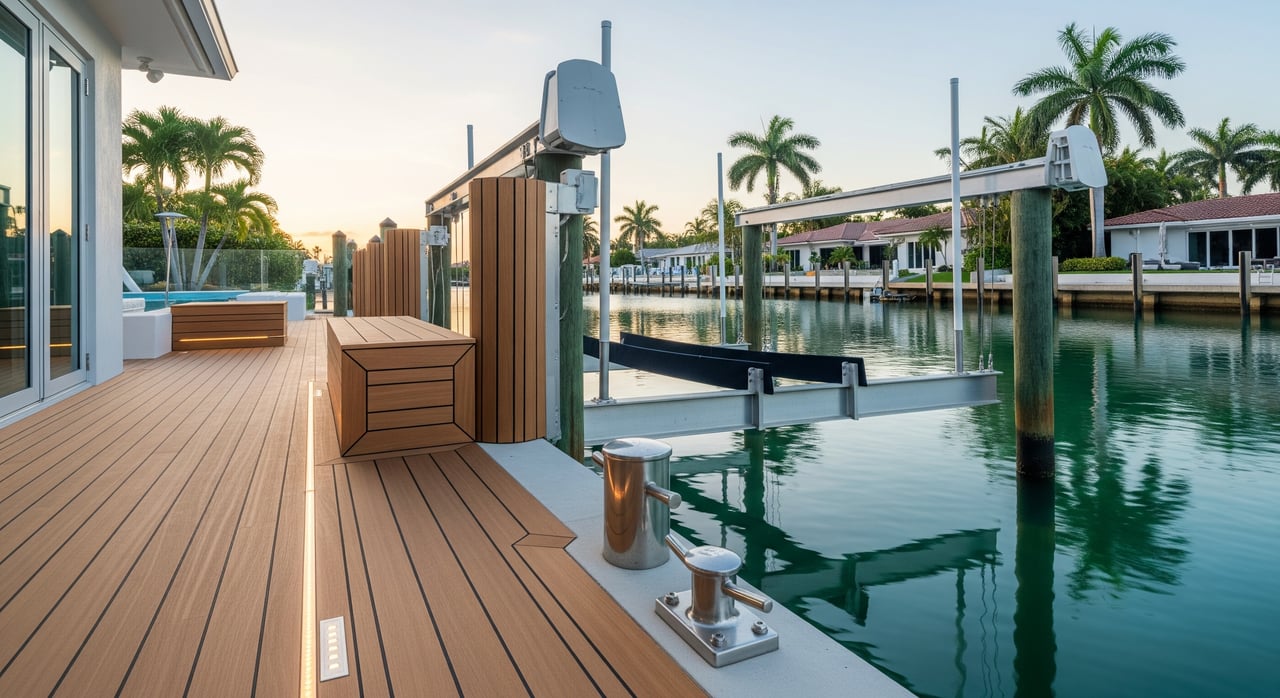
Best Dock Upgrades For Lighthouse Point Homes
December 4, 2025
December 4, 2025
Salt, sun, and storms shape every waterfront in Lighthouse Point. If you own on the canals or Intracoastal, your dock works hard year-round. The right upgrades protect your boat, boost safety, cut maintenance, and can improve buyer appeal when it is time to sell. This guide breaks down proven materials, permit must-knows, storm-smart design, and a simple plan to move forward with confidence. Let’s dive in.
Before you sketch a design, confirm what is allowed on your property. In Lighthouse Point, most dock work needs a city building permit, and some projects also require Broward County and State of Florida approvals. Federal review can apply if work affects navigable waters or wetlands. Electrical or fuel components need licensed trades and code-compliant installations.
Environmental protections influence what you can build. Seagrass shading limits, mangrove rules, and water-quality standards may shape dock width, materials, and lighting. If you plan a lift or any structure over submerged lands, expect deeper review. Start by gathering your survey and confirming riparian boundaries.
A site-specific assessment helps you avoid surprises. Depth at low tide, seawall condition, and neighboring docks all matter. If boat fit or lift placement is tight, consider a shallow-water bathymetry check before finalizing plans.
Your pilings carry every load from wind, waves, and boat motion. In saltwater, concrete piles and composite or fiberglass-encased piles offer excellent durability with low maintenance. Treated timber is common and cost-effective, but it needs protection from marine borers and regular inspection. Steel piles can work well if properly coated for corrosion.
For storm performance, specify marine-grade coatings and detail for scour around piles. Where feasible, elevate deck surfaces above expected storm surge. These choices reduce damage risk and shorten post-storm recovery.
Decking faces intense UV, heat, and splash. Composite or PVC-capped boards resist rot and insects and keep upkeep low. Tropical hardwoods provide a classic look and good density, but they need sealing and can fade in the sun. Pressure-treated lumber is budget-friendly, though its lifecycle is shorter in saltwater.
Whatever you choose, use 316 stainless steel fasteners, allow drainage gaps, and pick slip-resistant textures. In full sun, some composites run warm. If heat is a concern, review lighter colors or products tested for surface temperature.
A lift keeps your hull clean and reduces maintenance from marine growth. Hydraulic lifts handle heavier boats smoothly, while electric winch lifts suit many mid-size vessels. Floating lifts can help in areas with depth or piling limits. Match the system to your boat’s weight, beam, and draft, and verify the lift, pilings, and anchors are engineered for the load.
For hurricane season, plan for removal or securement. Quick-release components and clear procedures make a difference before a storm. Confirm local requirements for anchoring and lift installation before you buy.
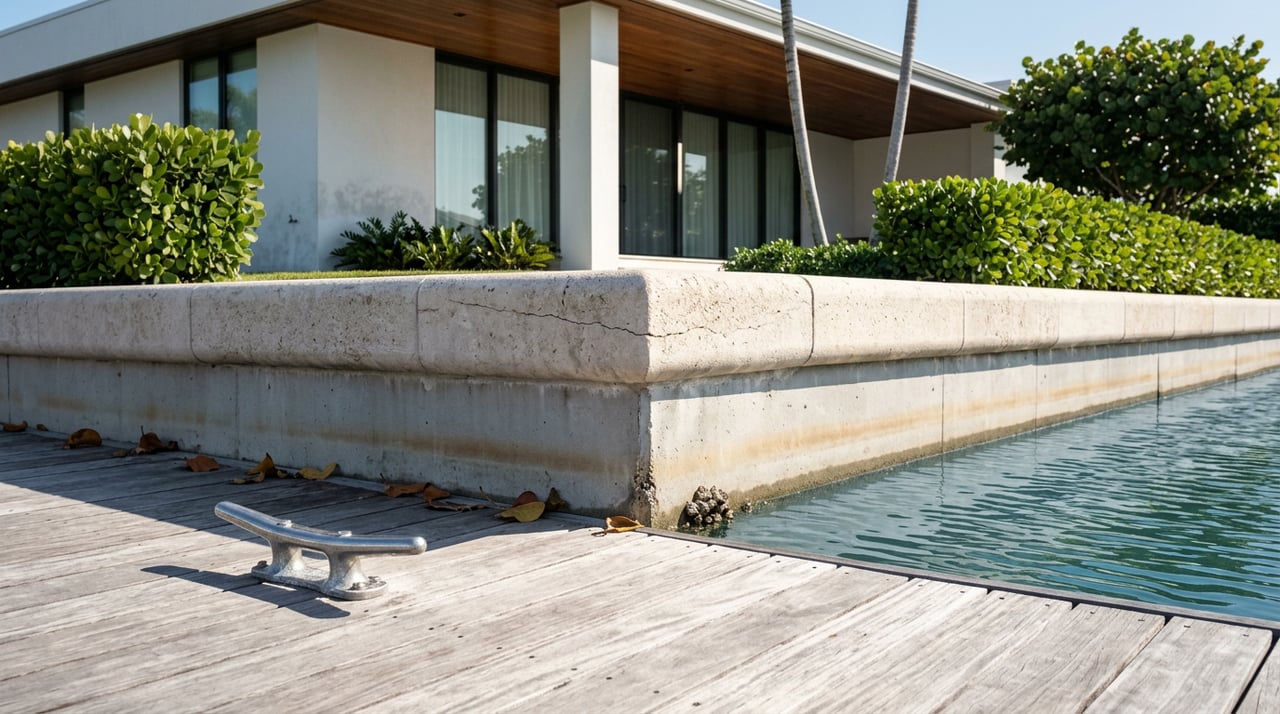
Your dock’s performance depends on your seawall. If the seawall needs reinforcement or replacement, coordinate both projects to save time and reduce mobilization costs. In many cases, seawall upgrades require permits from county or state agencies. Addressing the wall first can improve dock stability and extend overall service life.
Add utility upgrades that increase safety and function. For shore power, use marine-grade wiring with ground-fault protection and code-compliant pedestals. Low-voltage LED lighting improves visibility and reduces energy use, and solar fixtures can work for occasional-use areas. Be mindful of light spill to neighbors and navigation sightlines.
Install hose bibs with corrosion-resistant fixtures and backflow prevention if using freshwater. Private fueling setups carry strict rules and spill-prevention requirements, so evaluate whether they make sense for your dock. For waste, follow no-discharge rules and plan for pumpouts at approved facilities.
Simple additions can prevent damage and injuries. Size cleats, fenders, and bumpers for your boat and local wave conditions. Use non-slip surfacing on walking areas and steps. Adjustable gangways with handrails help you manage tidal changes and keep access stable for all users.
Add dock boxes and lockable storage for lines, pumps, and safety gear. Visible life rings and a clean, clutter-free deck reduce trip hazards and speed response in an emergency.
For a crisp, long-lasting look, consider capped composites, PVC trim, and aluminum framing systems with hidden fasteners. These materials reduce staining, resist corrosion, and keep maintenance simple. A clean, cohesive dock aesthetic supports curb appeal from the water, which can matter to buyers in Lighthouse Point’s premium neighborhoods.
Plan your dock to handle seasonal storms. Where practical, elevate fixed decking above projected surge levels. Open grating or wider board spacing can reduce hydrostatic pressure from waves. Removable ladders, rails, and lift components are easier to secure or store ahead of a hurricane.
Make pre-storm tasks routine. Remove or relocate boats to safer moorage when possible. Tie down or remove loose items and follow your lift manufacturer’s guidance for securing equipment. After the storm, inspect pilings, connections, and hardware before resuming use.
Looking long-term, prepare for changing water levels. Over time you may reconfigure gangways, extend ramps, or adjust elevation. Designing with modular components now can make future adaptations easier and less costly.
Service life depends on materials and maintenance. Treated timber components can last 10 to 30 years in marine conditions with proper care and borer protection. Tropical hardwood decking can reach 15 to 30 years. Composite and PVC decking often exceed 20 years with minimal upkeep. Concrete or composite piles can provide multiple decades of service in saltwater.
Plan on annual inspections and post-storm checkups. Look for fastener corrosion, loose cleats, and wear at high-load points. Clean and reseal when required by your material specifications.
From a marketability standpoint, buyers value function, safety, and low upkeep. In Lighthouse Point, a well-designed dock with a properly sized lift, safe access, and durable materials is a strong selling point. Exact return varies by property and water access, but high-quality, low-maintenance choices tend to stand out in listings and showings.
Follow this simple checklist to move from idea to installation:
Ready to align your dock upgrades with your home goals and resale plans? For a private conversation about which improvements resonate with Lighthouse Point buyers, connect with Maria Montalbano for a personalized market review and guidance.

What Buyers and Sellers Need to Know About the Fort Lauderdale Real Estate Market Right Now.

A Complete Guide to Preparing to Sell Your Home in Fort Lauderdale Before the Sign Goes Up.

A Seller's Guide to the Home Selling Process in Fort Lauderdale From Contract to Close.

What Sellers Need to Understand About Buyer Psychology When Selling Your Home in Fort Lauderdale.
If you are relocating to South Florida, let me know the needs of your ideal real estate purchase, and my team and I will conduct in-depth market research to prepare the properties for your viewing upon arrival or virtual showing.