Understanding The Landings Waterfront Micro Market
July 2, 2026
July 2, 2026
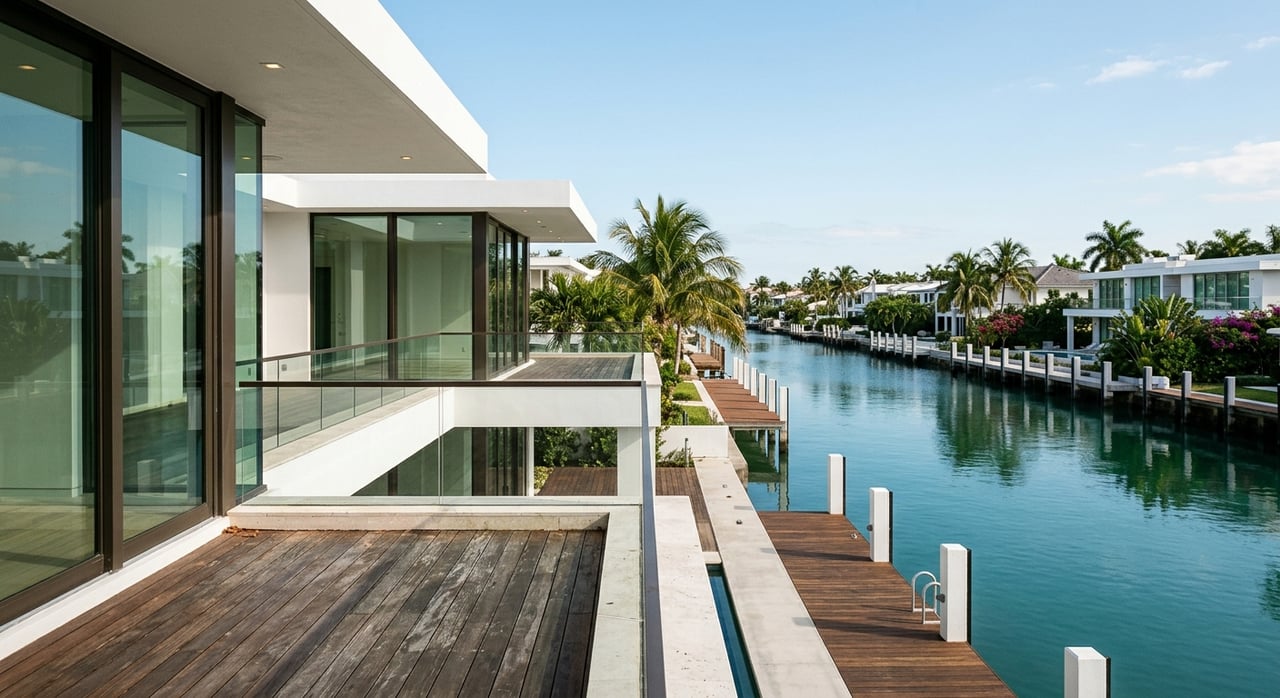
If you have ever wondered why two waterfront homes in The Landings can look similar online but command very different attention and pricing, the answer usually comes down to the micro market. In this part of Fort Lauderdale, the neighborhood name matters, but the real story is often the lot, the canal, and the boating setup. When you understand how The Landings breaks apart internally, you can make sharper buying or selling decisions. Let’s dive in.
The Landings is an officially recognized Fort Lauderdale neighborhood association, and its own history shows the area developed in phases. The First Section runs from 52nd Street to 56th Court, the Second Section runs from 56th Court to 59th Street, and a later third section ultimately became Bay Colony. That history still shapes how the market behaves today.
For you as a buyer or seller, that means The Landings should not be viewed as one single waterfront product. Homes in the first section, second section, and Bay Colony-adjacent areas can offer very different water orientation, lot layouts, and boating utility. Even before you compare finishes or square footage, submarket placement can change how a property is perceived.
In many neighborhoods, buyers start with the street name and then narrow down from there. In The Landings, experienced buyers often do the reverse. They start by asking where the home sits within the neighborhood and how that location affects canal access, frontage, privacy, and future potential.
The association history notes that early model homes were built around 55th Street and Bayview Drive before later sections were added. That phased development helps explain why the neighborhood has different lot patterns instead of one repetitive layout. The result is a market where internal variation can be significant.
Bay Colony, which was once the third section tied to The Landings, now acts like its own upper-tier enclave. Recent examples highlight the gap. One Bay Colony estate listing described a 0.38-acre waterfront lot with a 110-foot dock and 151 feet of seawall, and another Bay Colony home sold for $7.3 million.
That does not mean every nearby home belongs in the same pricing tier. It means the north-end enclave has its own identity, and buyers tend to recognize it as distinct from a more standard canal-front home elsewhere in The Landings. If you are evaluating value, this separation is important.
One of the clearest patterns in The Landings is that lot size and frontage often matter as much as the house itself. Public-record-backed parcel examples show that many lots cluster around roughly 9,000 to 10,500 square feet with about 88 to 106 feet of frontage. Properties such as 5556 NE 29th Ave and 5300 NE 31st Ave reflect this more typical waterfront format.
That baseline product can still be very appealing. You may have functional canal frontage, usable dock space, and a strong waterfront lifestyle. But in this micro market, buyers often pay a premium when the lot becomes wider, deeper, or more flexible for boating.
As lot dimensions increase, so does the market reaction. A parcel at 5340 NE 33rd Ave shows 12,567 square feet and 109.05 feet of frontage, while 3320 NE 58th St shows 16,193 square feet and 150.26 feet of frontage. Those numbers place a property into a different conversation.
At the top end, geometry can become the headline. A combined parcel at 2797 NE 51st St shows 268.81 feet of frontage, which reads more like a trophy or redevelopment opportunity than a standard canal home. In other words, not all waterfront frontage carries the same weight.
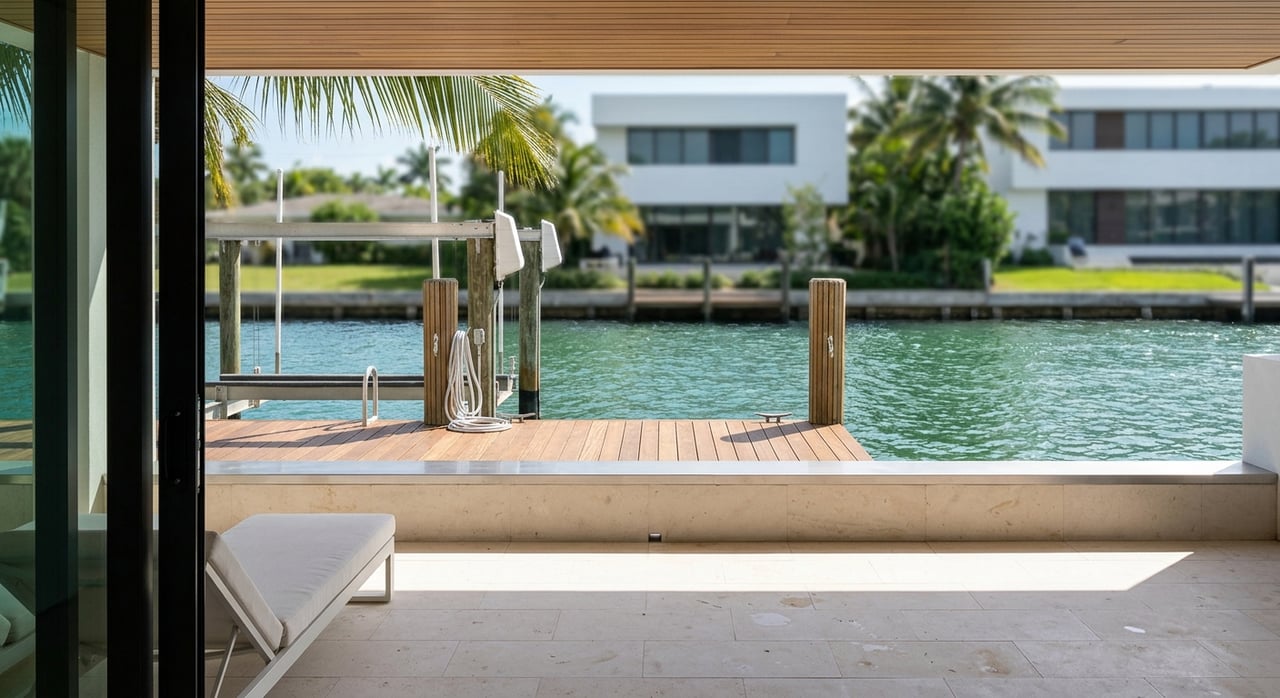
In The Landings, the canal behind the home is not just a backdrop. It directly affects how the property lives and who will want it. Canal width, turning ability, and proximity to broader water routes can influence a buyer’s decision as much as interior design.
Recent listings make this especially clear. A point-lot property at 5201 NE 33rd Ave was marketed with two docks and room for a 56-foot yacht. Another property at 5561 NE 33rd Ave highlighted 85 feet on a 140-foot-wide canal with ocean access and no fixed bridges.
These details matter because boating utility is highly personal. One buyer may care most about fitting a larger vessel, while another may prioritize easier maneuverability or a cleaner route out to open water. That is why two homes with similar square footage can attract very different levels of demand.
Certain waterfront positions tend to sit higher on the desirability curve. A home at 3200 NE 56th Ct was described as having an oversized turning basin and T Canal just three lots from the Intracoastal. That combination suggests easier navigation and stronger marine usability than a straight canal run might offer.
Point lots also tend to stand out because they can offer more dock flexibility and a stronger sense of openness. When you combine that with deep water or wider canal dimensions, the lot often becomes the asset that defines the property’s long-term appeal.
A waterfront address does not automatically mean the same boating experience from one property to the next. In The Landings, bridge access is one of the biggest dividing lines in the market. Buyers who need a specific marine setup usually pay close attention to whether a route includes a fixed bridge, no fixed bridges, or a more constrained path.
Recent listings in the neighborhood make those differences explicit. Some homes are marketed as no-fixed-bridge deepwater properties, while others are positioned as fixed-bridge ocean-access homes. That tells you the market does not treat all water access equally.
City records show that Bayview Drive is more than a neighborhood street. It remains part of an active infrastructure corridor through the area. Fort Lauderdale’s 2024 sewer project included work just north of Commercial Boulevard in The Landings, and the city’s capital plans include replacement of the Bayview Drive bridge over Longboat Inlet.
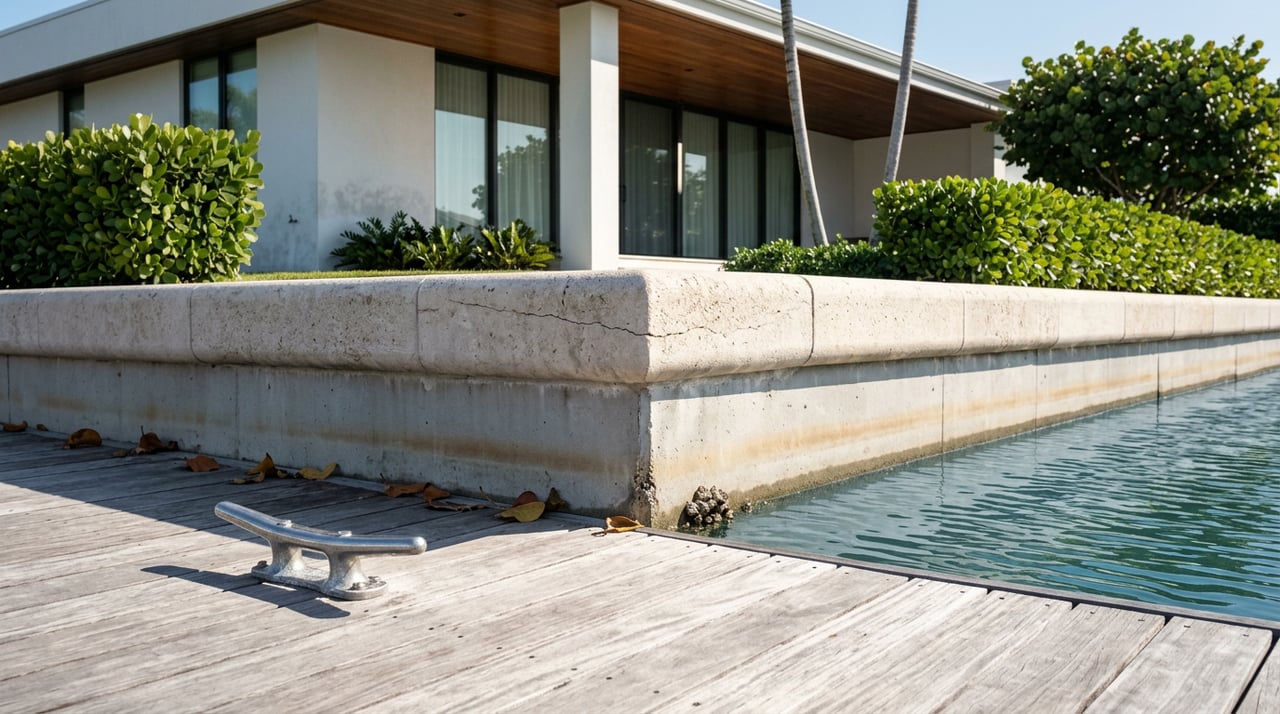
There has also been city seawall work in Bay Colony south of the Bay Colony Drive bridge. For you, the takeaway is simple: this is a bridge-sensitive, maintenance-heavy waterfront setting, and infrastructure can influence both access and perception. In a boating-focused micro market, that matters.
Redfin’s Landings market page shows a median sale price of $1.8 million over the three months ending May 2026, up 180.6% year over year. Because that figure comes from a small and mixed inventory sample, it works better as a directional signal than a precise benchmark. The more useful lesson is how segmented pricing can be inside the neighborhood.
In The Landings, buyers often sort homes by practical utility before they focus on broad neighborhood branding. Frontage, canal width, dockability, turning room, and bridge access all shape how a property is valued. That is why a home’s internal market position can matter more than the fact that it shares the same neighborhood name as another listing.
If you are shopping in The Landings, look beyond the photos and ask focused questions about the lot and water.
Those answers can help you compare homes more accurately and avoid treating the neighborhood as a one-price market.
If you are selling, your property’s value story may be more specific than a generic waterfront description. A wider canal, stronger turning radius, larger frontage, or more flexible dock setup can materially change how buyers view the home. The strongest marketing usually explains those advantages clearly and early.
This is especially important in a luxury waterfront market where buyers are often comparing marine usability, not just finishes. When a property is positioned correctly, the right audience can see why it stands apart.
The Landings is a strong example of how waterfront value is created by placement, geometry, and access, not simply by neighborhood name. From the first and second sections to Bay Colony-adjacent properties, the differences inside the neighborhood are meaningful. If you understand those layers, you can make more confident decisions whether you are buying, selling, or simply tracking value.
In a market like this, broad averages only tell part of the story. The sharper view comes from reading each property in context and understanding what the water actually offers. For tailored guidance on The Landings and other Fort Lauderdale waterfront micro markets, request a private consultation and personalized market review with Maria Montalbano.

What Buyers and Sellers Need to Know About the Fort Lauderdale Real Estate Market Right Now.

A Complete Guide to Preparing to Sell Your Home in Fort Lauderdale Before the Sign Goes Up.
A Seller's Guide to the Home Selling Process in Fort Lauderdale From Contract to Close.

What Sellers Need to Understand About Buyer Psychology When Selling Your Home in Fort Lauderdale.
If you are relocating to South Florida, let me know the needs of your ideal real estate purchase, and my team and I will conduct in-depth market research to prepare the properties for your viewing upon arrival or virtual showing.